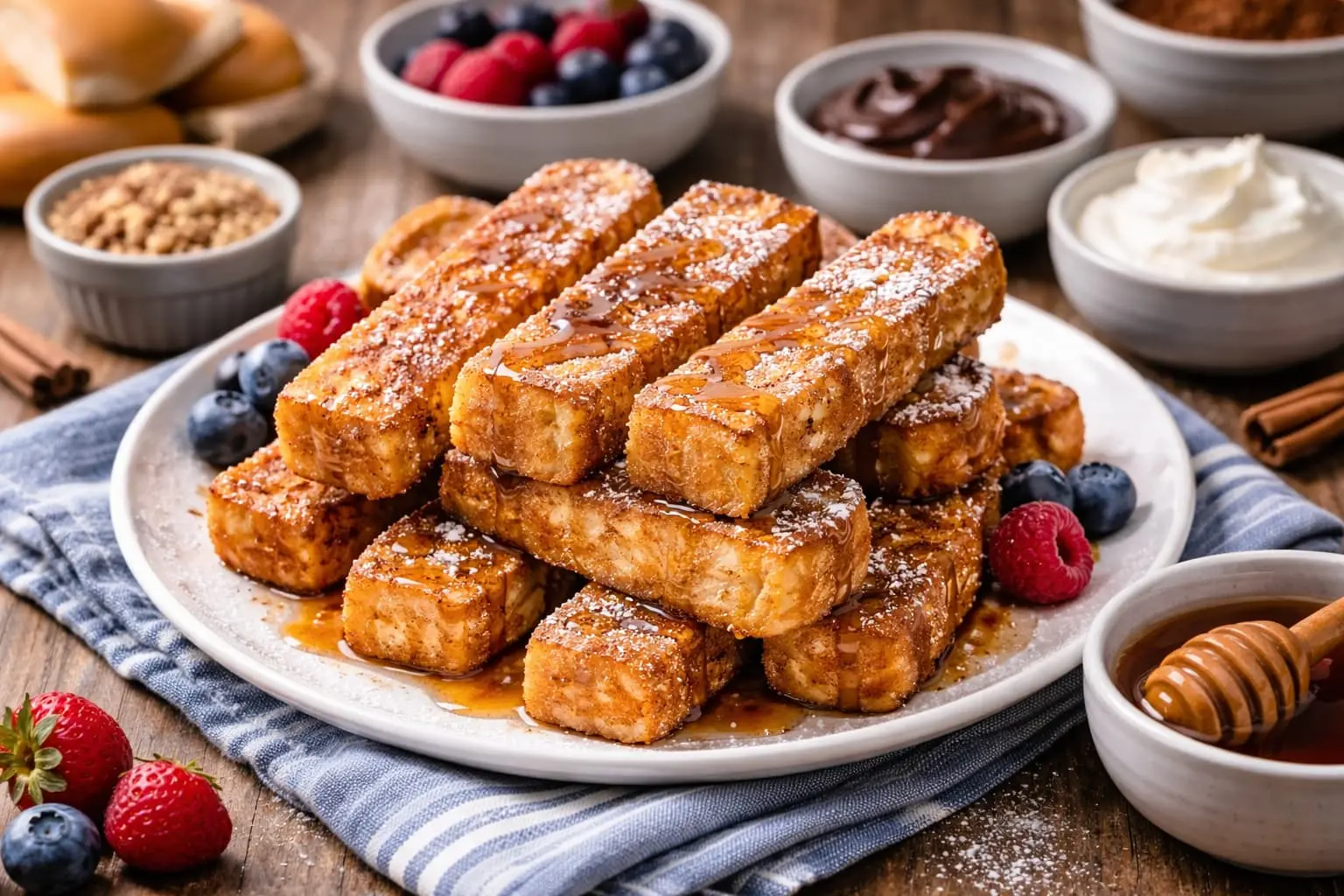
How to make French toast sticks at home
French toast sticks sound like a restaurant thing and are actually one of the simplest changes you can make to a recipe you already know. Cut the bread differently, and everything else about the dish improves.
If you like French toast but keep ending up with soggy slices and a messy plate, this is the fix. Sticks cook more evenly, crisp better, and are far easier to eat. Children like them for obvious reasons. Adults like them because they work equally well on a slow Sunday and in a meal-prep container on a Tuesday.
If you’ve never made the classic version, my basic French toast method covers the technique, and this page is the fun variation on top of it.
What they actually are
Exactly what the name says. Instead of dipping whole slices, you cut the bread into long strips first, then soak and cook those.
That one change does more than it should. More surface touches the pan, so you get better browning and crisper edges. And the shape is built for dipping, which means syrup, chocolate sauce or fruit compote without reaching for a knife and fork.
There’s a quieter benefit too: portioning. Sticks feel lighter than a plate of slices while being just as filling, and they store, freeze and reheat noticeably better.
Why they beat regular French toast
Most people’s problem with French toast is texture. The middle is underdone while the outside is already too dark. Sticks solve that almost by accident.
They’re smaller and thinner, so the heat reaches the center faster. You get even cooking, a soft interior that isn’t wet, and golden edges that give you contrast in every bite.
They’re also more flexible. Sweet or savory, dressed up for brunch or plain for a rushed weekday.
What you need
Short list, and every item is doing a job.
- Bread is the decision that matters most. Thick-cut holds its shape and takes on custard properly: brioche, challah, Texas toast, or even slightly stale white bread. My breakdown of which loaves perform goes into why.
- Eggs are the backbone. Structure and richness both come from them.
- Milk brings moisture and softness. Whole milk gives the creamiest result, though alternatives work.
- Vanilla adds warmth and depth. Subtle, but you notice when it’s missing.
- Cinnamon is the flavor people recognize as French toast. Nutmeg is optional and adds complexity.
- A pinch of salt balances the sweetness and sharpens everything else.
- Butter or oil for cooking, which adds richness and helps the color.
No special equipment, nothing you’d have to go looking for.
Cutting the bread
Preparation matters more here than in the slice version, because you’re creating the shape that does all the work.
Cut each slice into three or four strips, depending on how thick the bread is. Keep them even. Uneven sticks cook at different speeds and you’ll be pulling some out early.
If the bread is very fresh, leave the cut sticks out for 10 to 15 minutes. Slightly dry bread takes the custard better and holds together instead of tearing.
Avoid anything too thin or too soft. It won’t survive the dip.
The custard
In a shallow bowl, whisk the eggs, milk, vanilla, cinnamon and salt until smooth, with no strands of egg white left visible. That evenness is what makes every stick taste the same.
Leave the sugar out of the custard if you’re cooking over medium heat. It burns before the bread is done. Sweetness belongs on top, later.
Dipping, which is where it usually goes wrong
Dip each stick quickly, turning to coat all sides. Don’t let it sit.
If it drips, or feels heavy in your fingers, it’s already taken on too much. What you want is a light, even coating. Excess liquid gives you sticks that steam instead of crisping.
Work in batches, dipping only what goes into the pan immediately. Dipped bread that waits around changes texture while it waits.
Cooking them
Heat a large skillet or griddle over medium and let the butter or oil melt completely before anything goes in.
Lay the sticks down with space between them. Crowding traps steam, and steam prevents browning.
2 to 3 minutes a side, turning carefully until every face is golden. Sticks have more sides than slices do, so this takes patience rather than skill. Rushing the rotation is how you end up with two golden faces and two pale ones.
The outside should be lightly crisp and the inside soft but cooked through. Move them to a plate or, better, a wire rack. If you’re working in batches, hold the finished ones in a low oven.
Dips and toppings
These are built for dipping, so it’s worth having something good to dip into.
Warm maple syrup is the classic and still the best. Fruit sauces, strawberry or blueberry compote, bring acidity that cuts the richness. Chocolate sauce or hazelnut spread turns breakfast into dessert, which is sometimes the point.
Powdered sugar is simple and works especially well next to fresh fruit. Yogurt or whipped cream adds creaminess and a temperature contrast.
For a savory version, leave the cinnamon out of the custard and serve them with bacon, eggs, or a light cheese sauce.
In the oven
For a crowd, the oven is the sensible choice.
Preheat to 400°F (200°C), line a baking sheet with parchment and grease it lightly. Arrange the dipped sticks in a single layer, bake about 10 minutes, flip, then another 8 to 10 until golden.
Slightly drier than the pan version, and much easier when you’re feeding six people.
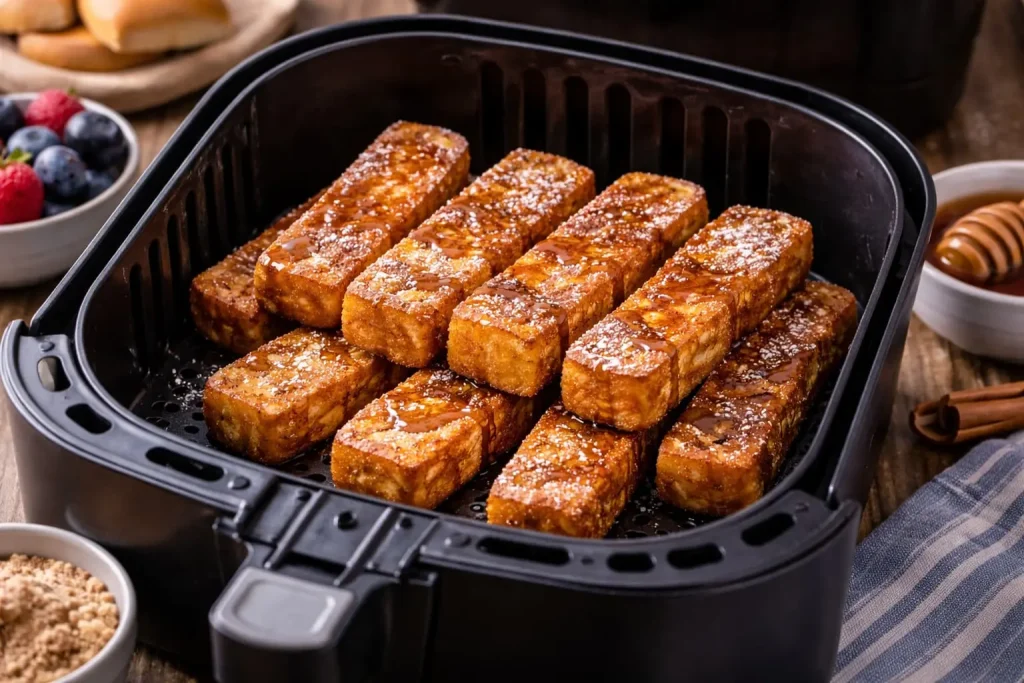
In the air fryer
This works better than you’d expect.
Preheat to 375°F (190°C), spray the basket lightly with oil, and arrange the sticks in a single layer. 8 to 10 minutes, turning halfway. Crisp outside, soft inside, and much less oil than the skillet.
My full guide to French toast in the air fryer has the timing and temperature detail if you want to go further with the method.
Storing and reheating
Cool completely before anything goes in a container.
Refrigerated in an airtight container they keep about three days. To freeze, spread the cooked sticks on a baking sheet until solid, then move them to a freezer bag. They hold up for about two months.
Reheat in the oven, a toaster oven or the air fryer. The microwave softens them too much and undoes the texture you worked for.
Mistakes that ruin them
- Bread too soft, which breaks apart in the custard
- Soaking too long, which makes them soggy
- Heat too high, which browns the outside before the middle cooks
- Crowding the pan, which prevents browning
- Skipping the salt, which leaves them bland
Why they’re worth making
Small change, disproportionate payoff. Easier to cook, easier to eat, easier to adapt than a plate of slices.
Simple ingredients, a technique you’ll have after one try, and results that repeat. That’s a fair definition of a recipe worth keeping.
Frequently Asked Questions
How are French toast sticks made?
French toast sticks are made by cutting thick slices of bread into long strips, dipping them briefly into a custard made with eggs, milk, and spices, and then cooking them until golden. The stick shape helps them cook more evenly and makes them easier to dip and serve. The method is quick and flexible once you have done it once, and it works on the stovetop, in the oven, or in an air fryer.