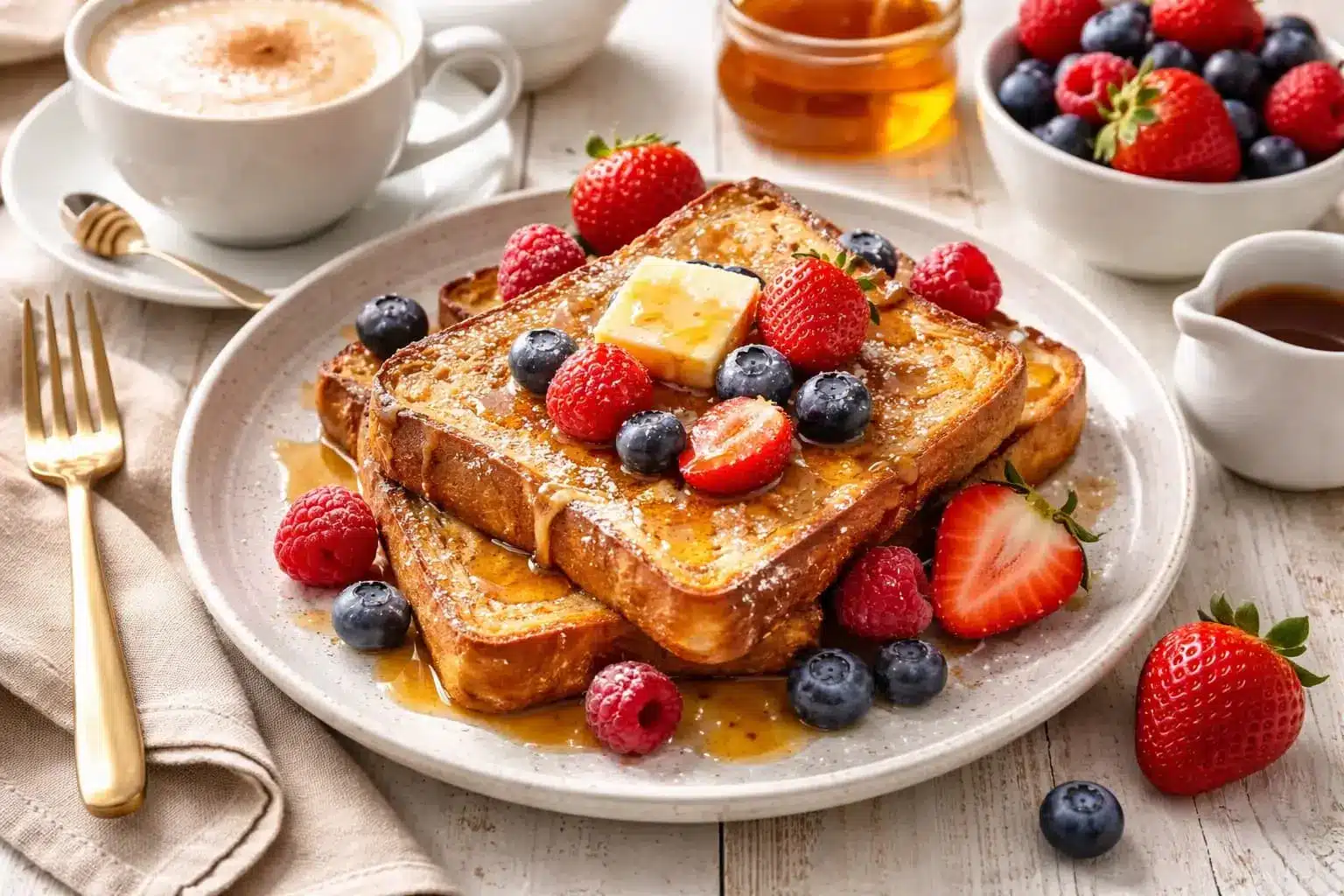
How to make French toast without milk
French toast without milk is easier than most people assume, and the result doesn’t taste like something is missing.
Empty fridge, lactose intolerance, a dairy-free household, or just a preference: the reason doesn’t change the method. Milk is traditional here, not structural. Once you know what it’s actually contributing, swapping it out takes about thirty seconds of thought.
Want the classic version first? It’s in my basic French toast method.
What milk is doing in there
Milk softens the egg mixture and gives you a creamier interior. It also balances the richness of the eggs, which is what keeps the toast from tasting dense or dry.
None of that requires dairy specifically. What it requires is moisture, and moisture has plenty of sources.
The division of labor is worth holding onto: the eggs give you structure, the liquid controls texture. Swap the liquid sensibly and the result holds up.
When this comes up
Lactose intolerance and milk allergies are the medical reasons, and they aren’t rare. Plant-based and dairy-free diets are the chosen ones. And then there’s the most common case of all, which is that there’s no milk in the house and breakfast still has to happen.
Knowing the alternatives saves a trip to the shop for a recipe that was never meant to be complicated in the first place.
The substitutes, and what each one costs you
Water
The simplest option, and it works better than it has any right to. It keeps the egg mixture light and lets the bread take on moisture without turning heavy.
You lose some richness. Syrup, fruit or a heavier hand with the cinnamon covers the gap easily.
Plant-based milks
Almond, oat, soy and coconut all do the job well.
Oat is the closest to dairy in both texture and neutrality, which makes it the safe default. Almond is lighter. Coconut brings a subtle sweetness and more body, which some people love and others find distracting.
Whichever you pick, buy unsweetened. Sweetened versions push the custard somewhere you didn’t ask it to go.
Juice
Orange or apple juice, in small amounts, gives you a slightly sweet and noticeably aromatic version.
This one wants company: cinnamon and vanilla in the custard, fruit on top. On its own it can read as odd.
Cream alternatives
For something richer, dairy-free cream or coconut cream diluted with water gets you closest to the custardy texture of the traditional recipe.
What you need
- Eggs, which are doing the structural work and are not optional here
- A milk substitute of your choosing, for moisture
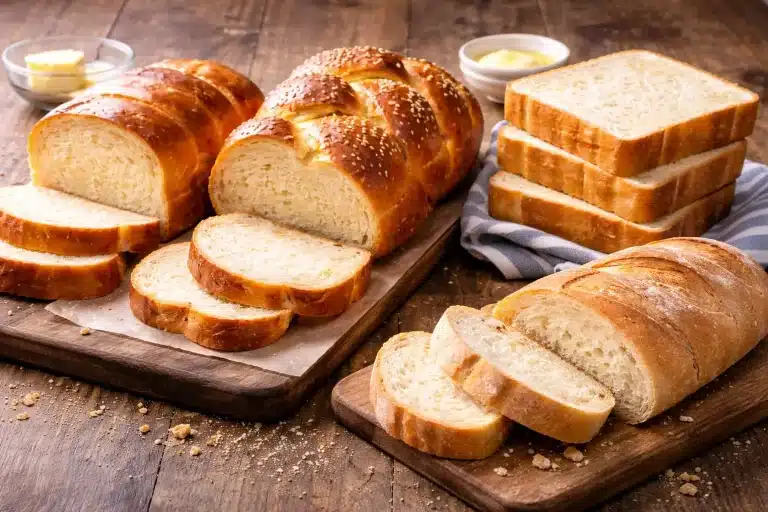
- Bread, thick and sturdy: brioche, challah, sourdough, or slightly stale white bread
- Vanilla extract, for warmth and depth
- Cinnamon, which is the flavor people recognize
- A pinch of salt, to balance the sweetness
- Butter, oil or dairy-free butter for the pan
Nothing specialized, nothing you’d have to hunt for.
Bread matters more without milk
With a lighter liquid in the mix, the bread has less help holding itself together.
Soft sandwich bread tends to fall apart, and it falls apart faster with water than it would with dairy. Thicker bread keeps its shape and takes on the egg mixture evenly.
Slightly stale is the target, as always. It absorbs without going soggy, which matters more here than in the standard recipe.
Avoid anything thin, and avoid very fresh if you have the choice.
Step by step
The technique doesn’t change.
Whisk the eggs, your chosen liquid, vanilla, cinnamon and salt in a shallow bowl until smooth and properly combined.
Dip each slice briefly, coating both sides. Don’t soak it. Without milk’s natural thickness, it’s easy to overshoot and end up with a wet middle.
Heat a skillet or griddle over medium and add the butter or oil. Lay the slices down with space between them and cook 2 to 3 minutes a side, until golden and cooked through.
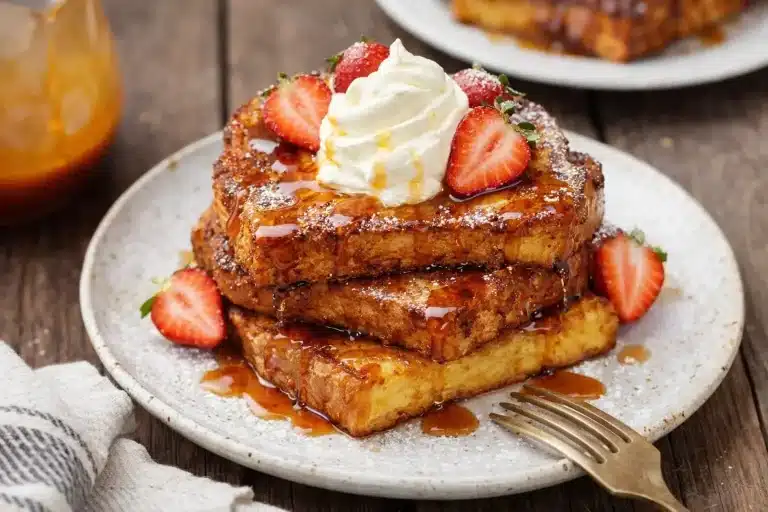
Crisp outside, soft inside. Same target as always.
Where it usually goes wrong
Too much liquid. This is the big one. Milk has body that water and thinner plant milks don’t, so the same dipping habit produces a soggier result.
Under-seasoning. Milk contributes a faint sweetness you don’t notice until it’s gone. Without it, the vanilla, cinnamon and salt are carrying more of the flavor, so be less shy with all three.
Heat too high. Medium lets the egg cook through without the bread darkening first.
Crowding the pan. Steam builds between the slices and browning stops.
Flavor variations
- Nutmeg or cardamom, for warmth
- Vanilla bean paste instead of extract, for deeper aroma
- Citrus zest, when you want brightness against the richness
- A little maple syrup or honey in the custard, kept minimal so it doesn’t burn
Dairy-free and vegan
For dairy-free, plant-based milk and dairy-free butter is the whole adjustment.
For a fully vegan version you’ll also need to replace the eggs, using plant milk combined with cornstarch, chickpea flour or flaxseed. The texture shifts, and the result is still good.
Going that far? My eggless French toast method covers the binders properly.
Toppings
They do more work here, since they’re replacing some of the richness that left with the dairy.
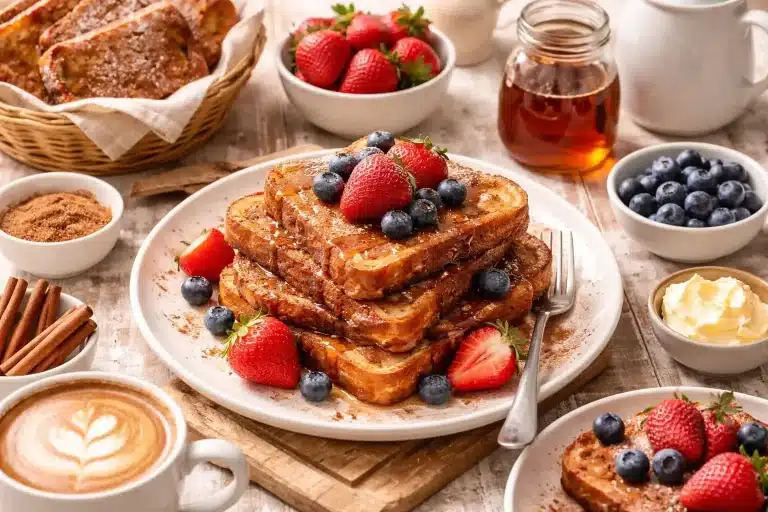
- Fresh fruit, for moisture and brightness
- Maple syrup or honey, for sweetness
- Nut butters, for richness and protein
- Dairy-free whipped cream or a yogurt alternative
- Cinnamon sugar, which never stops working
Storing and reheating
Cool completely before storing. Refrigerated in an airtight container it keeps about three days.
To freeze, lay the slices in a single layer until solid, then move them to a freezer bag. Reheat in the oven, the toaster or an air fryer. The microwave will work and will cost you the texture.
Technique over ingredients
Milk is traditional. It isn’t required.
With the right bread, proper seasoning and a sensible liquid, this version stands up next to the classic without apologizing for itself. Which is a reasonable reminder that good recipes rarely depend on any single ingredient. They depend on technique.
Frequently Asked Questions
Can French toast be made without milk?
Yes, French toast can be made without milk and still turn out soft and flavorful. Milk is traditionally used for moisture, but it is not essential. You can use alternatives like water, plant-based milks, or even diluted cream substitutes to achieve a similar texture.
What can I replace milk with in a recipe?
Milk can be replaced with several options depending on the recipe. For French toast, good substitutes include water, almond milk, oat milk, soy milk, coconut milk, or diluted dairy-free cream. The best choice depends on whether you want a lighter or richer texture, but all work well.