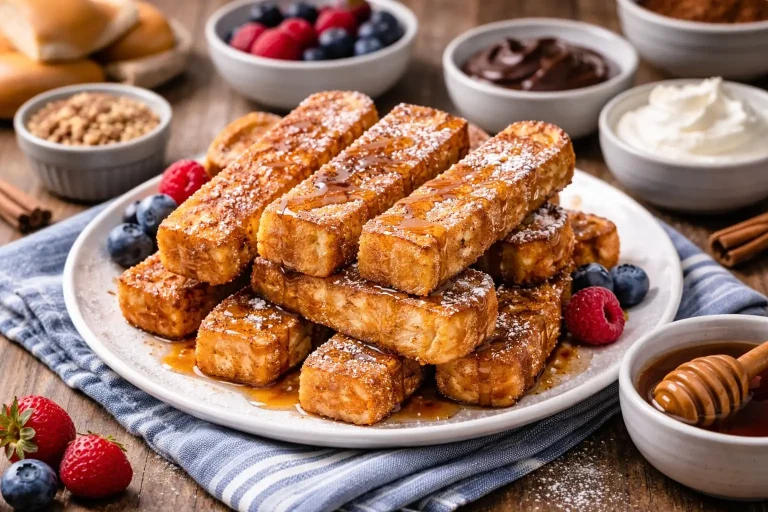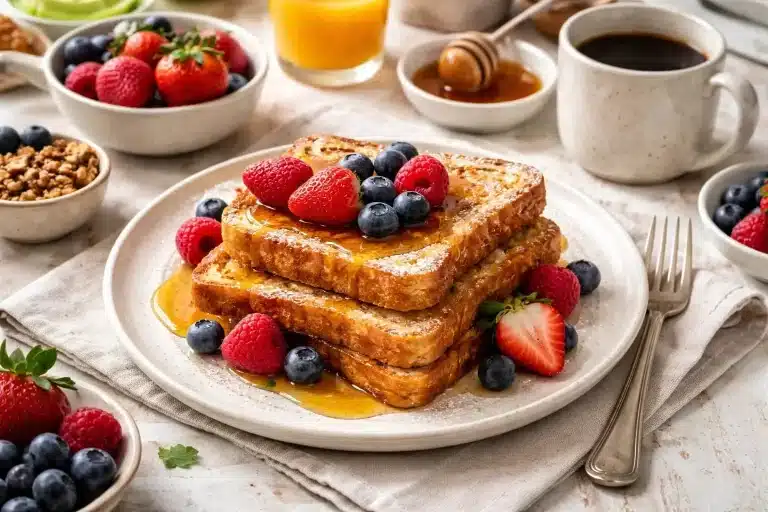
Classic Cinnamon French Toast Recipe with Simple Ingredients
Cinnamon French toast is the breakfast that never really goes out of fashion. It’s warm, it’s easy, and it makes the whole kitchen smell like a Sunday.
What makes it good isn’t complexity. It’s balance: crisp at the edges, soft in the middle, lightly sweet, and spiced enough to notice without tasting like a candle. Most of that comes down to technique rather than the shopping list, which is where people usually go wrong.
New to this? Start with my basic method for French toast and come back for the cinnamon version when you want the aroma.
Why cinnamon belongs in the custard, not on top
Cinnamon isn’t a garnish here. It’s part of the flavor base.
It brings warmth and a little sweetness of its own, which means you need less sugar, and it cuts through the richness of the eggs and butter rather than sitting on top of it. Whisk it into the custard and the flavor reaches every bite. Sprinkle it only at the end and you get a spiced surface over plain French toast.
That single decision is most of the difference between average and genuinely good.
It also happens to go with almost anything you’d put on the plate: syrup, fruit, nut butter, yogurt. That versatility is why this version survives in so many kitchens.
What you need
Bread is the foundation, and thickness matters more than variety. Brioche, challah, Texas toast and French bread all hold their shape and take on custard properly.
Eggs give structure and richness. They’re what makes it French toast rather than fried bread.
Milk brings moisture and softness. Whole milk gives the creamiest result, though alternatives work.
Cinnamon is the point. Ground, so it blends into the custard.
Vanilla adds depth behind the spice, and a pinch of salt stops the whole thing tasting flat.
Butter or oil for the pan, which is where the golden crust comes from.
Sugar is optional. Plenty of people skip it and let the cinnamon and the toppings do that work.
Ingredients (for 4 slices)
- 4 slices of brioche, challah, Texas toast or French bread, slightly stale and thick-cut
- 2 large eggs
- 1/2 cup whole milk or preferred milk alternative
- 1 to 2 teaspoons ground cinnamon
- 1 teaspoon vanilla extract
- Pinch of salt
- Butter or oil for cooking
- Optional: 1 to 2 teaspoons sugar or maple syrup for extra sweetness
Choosing the bread
Soft sandwich bread drinks the custard too fast and turns to mush. Thicker bread gives you structure, and structure is what lets the inside stay soft while the outside crisps.
Slightly stale is better than fresh. It absorbs without collapsing. If your loaf is very fresh, leaving the slices out for 10 to 15 minutes is enough to dry them slightly.
Skip thin slices altogether. They cook through before any contrast develops, and contrast is the entire appeal.
Making the custard
Whisk the eggs, milk, cinnamon, vanilla and salt together in a shallow bowl until the mixture is smooth and the cinnamon is evenly spread through it.
Cinnamon clumps. That’s worth knowing, because a lazily mixed custard gives you one slice that tastes of nothing and the next that tastes of nothing but spice. Whisk until the color is uniform.
If you want it sweeter, a small amount of sugar or maple syrup in the custard is fine. Keep it small, because sugar in the pan burns before the toast is done.
Dipping
The most common mistake in any French toast recipe is leaving the bread in too long.
Dip each slice briefly, both sides. It should come out moist, not heavy, and definitely not dripping. Over-soaking gives you a center that never really cooks.
Dip only what goes straight into the pan. Bread that sits around after dipping changes texture while it waits.
Cooking
Heat a skillet or griddle over medium and let the butter or oil melt completely before anything goes in.
Lay the slices down with space between them. Crowding traps steam, and steam stops browning.
2 to 3 minutes a side, until golden. Flip gently. Cinnamon custard clings, and a rough flip tears the surface.
Medium heat is the whole game here. Too hot and the cinnamon burns before the inside sets. Too low and the toast dries out waiting.
Variations worth trying
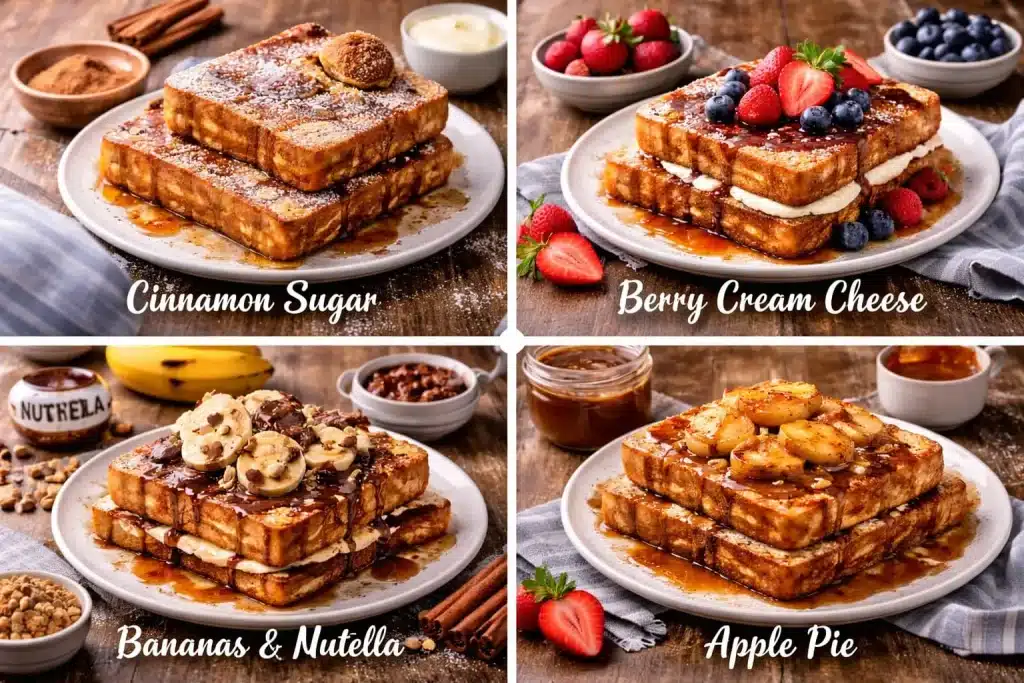
Cinnamon sugar
Mix cinnamon with sugar and scatter it over the toast the moment it leaves the pan. The residual heat melts it just enough to set into a thin crust.
Extra-spiced
Nutmeg, cardamom or allspice in the custard adds depth. Keep the amounts small so cinnamon stays the lead and the rest stays in the background.
Dairy-free
Almond, oat or coconut milk in place of dairy. Oat milk holds the creamy texture best of the three.
Vegan
Use a plant-based egg substitute, such as chickpea flour or cornstarch whisked into plant milk. The texture won’t be identical, but the cinnamon carries it.
Toppings
The rule is simple: support the cinnamon, don’t compete with it.
- Maple syrup, which is the classic pairing for a reason
- Fresh fruit such as strawberries, bananas or blueberries, for brightness against the spice
- Apple slices sautéed with a little cinnamon of their own
- Greek yogurt or whipped cream for creaminess
- Nut butters for richness and a bit of protein
- Powdered sugar, which is mostly about how it looks, and that’s fine
In the oven, for a crowd
Cooking cinnamon French toast slice by slice doesn’t scale. The oven does.
Preheat to 400°F (200°C), line a baking sheet with parchment and grease it lightly. Arrange the dipped slices in a single layer, bake about 10 minutes, flip, then give it another 8 to 10 until golden.
The result is a little drier than the pan version. That’s the trade for feeding six people at once.
In the air fryer
Preheat to 375°F (190°C) and spray the basket lightly with oil. 8 to 10 minutes, flipping halfway.
Crisp outside, soft inside, and noticeably less fat than the skillet.
Mistakes that ruin it
- Too much cinnamon, which turns bitter rather than warm
- High heat, which burns the spice before the custard sets
- Skipping the salt, which leaves the flavor flat
- Crowding the pan, which steams instead of browns
- Bread too soft to survive the custard
Storing and reheating
Let it cool completely before it goes anywhere. Refrigerated in an airtight container it keeps about three days. To freeze, lay the slices out in a single layer first, then bag them once they’re solid. They keep up to two months.
Reheat in the oven, the toaster or the air fryer. The microwave works and produces something soft and disappointing, so avoid it if you have a choice.
Is it healthy?
It can sit in a balanced meal without much trouble.
Whole-grain bread adds fiber. Keeping the added sugar low and letting the toppings carry the sweetness helps. Pair it with fruit and something with protein, like yogurt or eggs on the side, and it stops being only carbohydrate.
Cinnamon adds flavor without adding sugar, which is the practical reason it earns its place here. Indulgent, but not excessive.