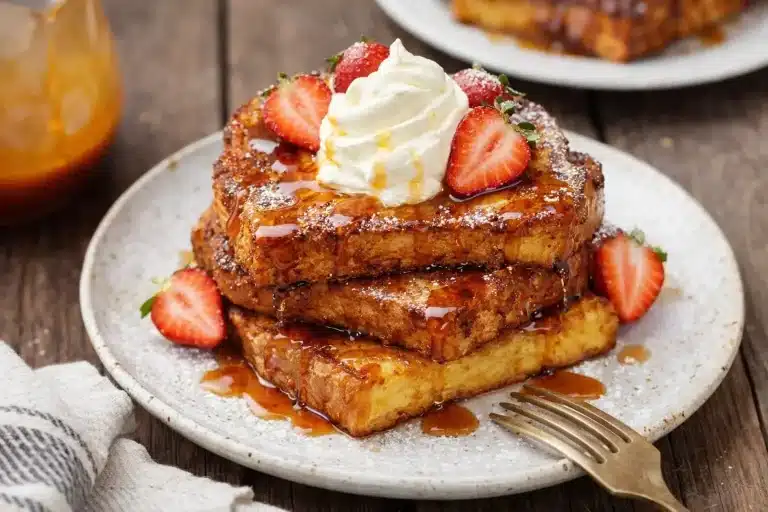
How to Make French Toast
Learning how to make French toast well is mostly a matter of attention. Good French toast and rushed weekday French toast use the same four ingredients; what separates them is what you do with the heat and the timing. This is the version that comes out like the first one.
What follows is a tested method that gives you golden edges, a custardy center, and a flavor balance that doesn’t depend on burying everything under syrup.
On paper it’s bread, eggs, milk and a skillet. In practice the details decide everything: which loaf you pick, how long it soaks, how hot the pan runs, what fat you cook it in. Get those right and the result changes category.
What makes great French toast
Before touching an ingredient, it helps to know what you’re aiming at. A good slice does three things:
- A custardy center. Not soggy, not dry.
- Golden, crisp edges. That light caramelization is not decoration; it’s half the pleasure.
- Balanced flavor. Gentle sweetness, warmth from the spices, and a base that doesn’t taste like plain egg.
The method below hits all three by adjusting the custard ratio, choosing the right bread, and cooking at a temperature that gives you control instead of chaos.
The essential ingredients, and why each one matters
You don’t need a full trolley. Everything here is easy to find. The differences live in the details.
Bread
The best choices are slightly stale and sturdy:
- Brioche, which is rich, soft and buttery
- Challah, egg-based, with excellent structure
- Thick-cut white bread, cheap and perfectly effective if it’s at least a day old
Fresh bread falls apart. Thin bread soaks through too fast. The sweet spot is 1-inch slices, dried out for a few hours, or lightly toasted if you’re in a hurry.
Eggs
Eggs are the base of the custard. Too many and it tastes eggy; too few and it goes soggy. The ratio that holds up reliably is 1 egg per 2 slices of bread.
Milk or cream
Whole milk gives you balance. Half-and-half gives you richness. Skim milk waters the whole thing down, so leave it out of this.
Flavor enhancers
Optional, and strongly recommended:
- A splash of vanilla
- Cinnamon, ⅛ to ¼ teaspoon
- A pinch of salt
- 1 to 2 teaspoons of sugar, which helps the caramelization

Step by step: how to make French toast
Simple, and consistent when you follow it.
1. Make the custard
In a shallow bowl, whisk together:
- 2 eggs
- ½ cup whole milk, or half-and-half for extra richness
- Vanilla, cinnamon, sugar and salt
Whisk until smooth and the spices are evenly through it.
2. Soak the bread, the right way
Lay one slice into the custard and give it 20 seconds per side. That’s long enough for the moisture to reach the center without the bread collapsing.
Don’t leave the bread sitting in the bowl while you do something else. That’s how you get soggy slices that fall apart in the pan.
3. Preheat the pan
Set a skillet over medium heat and add:
- A small pat of butter, for flavor
- A splash of neutral oil, for stability
The oil raises the smoke point so the butter doesn’t burn, and you get the golden crust without the bitterness.
4. Cook to golden
Lay the soaked slice into the hot skillet and cook 2 to 3 minutes per side, until deep golden brown.
Browning too fast means the heat is too high. Still pale after three minutes means it’s too low. Adjust once and leave it alone.
5. Serve immediately
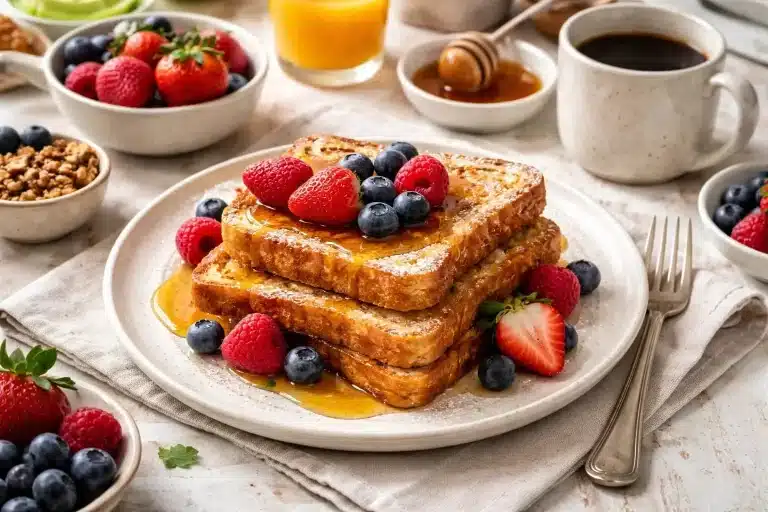
French toast is best fresh. Rest it a minute off the heat so the center finishes setting, then serve with maple syrup, fresh berries, powdered sugar, a spoonful of whipped cream, or something savory, which works better than people expect.
How long does it take?
10 to 15 minutes, start to finish.
The custard takes about a minute to mix. Each slice soaks for 20 seconds a side, and cooks for 2 to 3 minutes a side depending on your heat.
Making several batches means holding the finished slices warm in a low oven, which adds a few minutes overall without changing the active cooking time. It’s a faster breakfast than its reputation suggests.
If yours keeps coming out dense
Flat, heavy French toast is almost always a texture problem rather than a recipe problem, and it has its own set of fixes: how much air is in the custard, how briefly the bread sits in it, and how gently the heat sets the structure.
My guide to fluffy French toast works through that in detail.
Variations to try
Once the core method is second nature, these are effortless.
Cinnamon roll French toast
Dessert wearing a breakfast disguise.
Add extra cinnamon to the custard, whisk in a teaspoon of brown sugar, and let thick slices soak until fully coated. As they cook, the sugar caramelizes into a warm, fragrant crust that lands somewhere close to cinnamon roll filling.
Finish with a light cream cheese icing, just enough to melt into the ridges without taking over.
Savory French toast
This one flips the whole idea and proves the dish doesn’t have to live in the sweet lane.
Skip the sugar and vanilla. Season the custard with black pepper, paprika, and a pinch of garlic powder if you want more depth. Cooked, the slices take on a golden, slightly smoky crust that goes beautifully with crispy bacon, soft-scrambled eggs, or sliced avocado.
Worth knowing if you’d rather have something salty in the morning, or want a brunch dish that eats like an actual meal.
Orange-vanilla French toast
Bright, aromatic, and the version that wakes up the whole kitchen.
Fresh orange zest in the custard plus a tablespoon of juice gives you a citrus note that sits perfectly against the vanilla. As the slices cook, the orange oils release and the flavor reads fresh rather than sugary.
Brioche and challah suit this best, since they absorb the citrus custard without losing their shape.
Stuffed French toast
Bakery-style, and less complicated than it looks.
Spread a thin layer of cream cheese and fruit preserves between two slices, pressing gently so the filling stays put. Dip the whole stack, letting it absorb just enough to soften the outside while the center stays creamy.
Cooked, the outside goes golden and crisp while the inside turns warm, melty and slightly tangy.
Common mistakes
French toast has a reputation for being simple, and small habits still change the result completely.
Using the wrong bread
The most common one. Soft, fresh sandwich bread absorbs liquid too fast and comes apart before it reaches the pan.
What you want is bread with structure: brioche, challah, sourdough or French bread. Slightly stale is ideal, because it takes on the egg mixture without turning to mush.
Soaking too long
It’s tempting to leave it in there, on the theory that more soaking means more flavor. It doesn’t. It means worse texture.
Dip each slice briefly, just enough to coat both sides. If it’s dripping, you’ve already gone too far.
Forgetting to season the custard
Eggs and milk on their own are bland. This is the one that leaves people feeling something is off without being able to name it.
Vanilla, cinnamon, a pinch of salt, sometimes nutmeg. That’s the difference between a basic mixture and something that tastes like French toast.
Cooking at the wrong temperature
Heat control matters more than speed. High heat browns the outside before the inside cooks. Low heat dries everything out.
Medium gives you an even cook, a golden crust and a soft interior. Patience pays here more than technique does.
Overcrowding the pan
Crowding traps steam, and steam prevents browning. Each slice needs room.
Cook in batches if you have to. It costs a few minutes and the difference in texture and color is obvious.
Best toppings and serving ideas
Once the method is solid, toppings are the easiest way to make the dish yours.
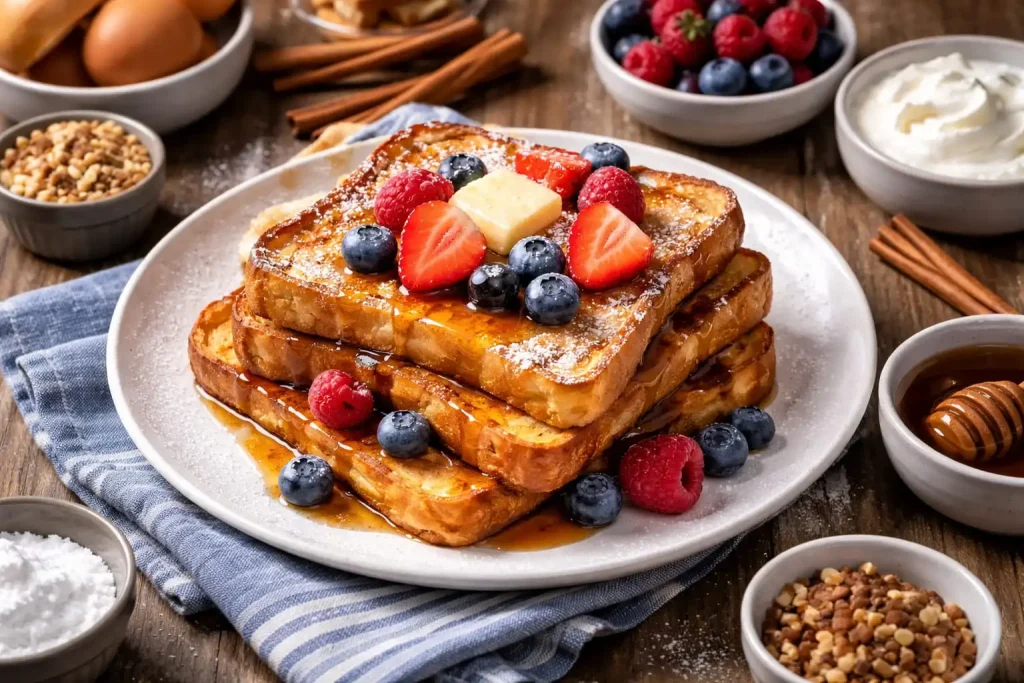
Classic toppings that always work
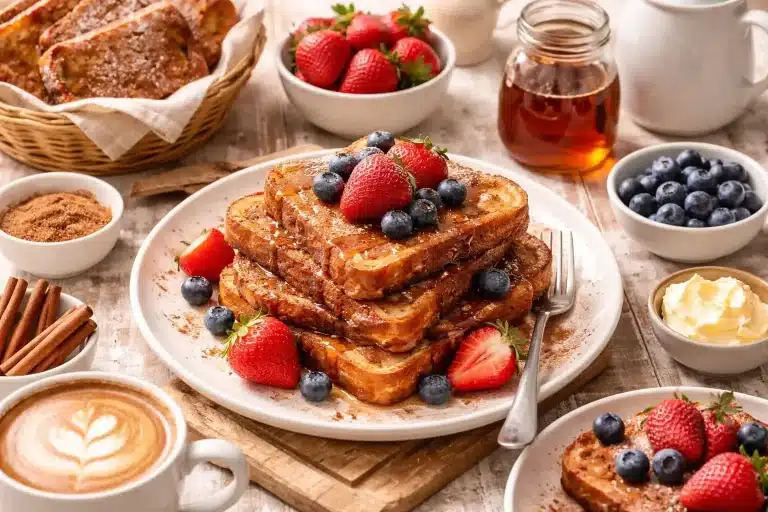
Warm maple syrup, powdered sugar, butter. Popular for a reason: they add without overpowering.
Real maple syrup rather than the artificial version makes a bigger difference here than almost anywhere else.
Fresh fruit, for balance and color
Strawberries, blueberries, bananas, raspberries. All bring freshness and contrast against the richness.
For something a little more finished, cook the fruit briefly with butter and a small amount of sugar. That gives you a quick sauce with almost no effort.
Creamy toppings, for richness
Whipped cream, mascarpone or Greek yogurt. The yogurt is the interesting one, giving you a tangy contrast and a lighter overall plate.
Crunchy toppings, for texture
Toasted nuts, granola or coconut flakes. Texture does a lot of work here.
A small handful is enough. Too much and the topping becomes the dish.
Savory and sweet together
Bacon, sausage or a fried egg turns this into brunch rather than dessert.
It works best when the toast itself isn’t very sweet, which is worth remembering when you season the custard.
Storing and reheating
Done properly, leftovers reheat well. Done carelessly, they go soggy or rubbery.
In the refrigerator
Let the slices cool completely before they go anywhere. Warm toast in a sealed container creates condensation, and condensation makes it soggy.
Airtight container, refrigerated, up to three days.
Freezing
The better option for meal prep. Lay the slices in a single layer on a baking sheet and freeze until firm, then move them to a freezer bag.
Freezing them separately first stops them sticking together and makes reheating far easier. They keep about two months.
Reheating
Avoid the microwave where you can. It heats unevenly and leaves the toast rubbery.
For several slices, the oven is best: 350°F (180°C) for 8 to 10 minutes. For a single slice, the toaster works surprisingly well.
From frozen
Straight into the oven or the toaster, no thawing. That restores the crisp edges while keeping the middle soft.
Substitutions
Part of why this recipe survives is how easily it bends. Dairy, gluten, eggs, sugar: all of it can be adjusted once you know what each component is doing.
Dairy-free
Replacing the milk is straightforward. Almond, oat and coconut milk all work, with oat usually preferred for its neutral flavor and creaminess. Plant-based butter or coconut oil handles the pan.
My French toast without milk method goes through each substitute and what it costs you.
Egg-free
Perfectly possible with the right adjustment. Plant-based milk combined with cornstarch or chickpea flour recreates enough of the custard’s body to hold everything together.
The texture shifts slightly, and the result is still good. My eggless method covers the binders and the ratios.
Gluten-free bread
Gluten-free loaves are more delicate. Choose thicker slices and let them dry out slightly before dipping, which stops them breaking apart and helps them absorb evenly.
Lower-sugar and healthier swaps
Leave the sugar out of the custard and let the toppings carry the sweetness. Fruit, honey or maple syrup added at the table gives you the same result with less of it.
For more protein, use a high-protein bread, or whisk a little Greek yogurt into the custard for a thicker mixture.
None of this is about rigid rules. It’s about knowing the base technique well enough to adapt it.
Where to go next
With the method above in your hands, these are the directions worth exploring.
- Which loaf to buy and why it matters, the single decision with the biggest effect on texture
- The cinnamon version: warm, cozy, and barely more work
- Cut them into sticks instead, easier to cook and much easier to dip
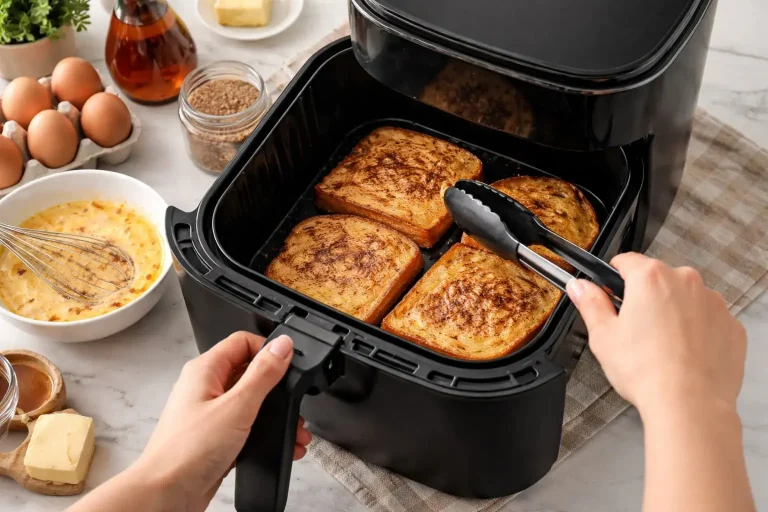
- The air fryer method: crisp edges, almost no mess
FAQ – How to make French toast
What is the trick to French toast?
The real trick to French toast is balancing moisture and heat.
Use sturdy, day-old bread so it soaks the custard without falling apart, soak each slice just long enough to reach the center, and cook over medium heat so the inside sets while the outside browns evenly.
Adding a bit of sugar to the custard, not the pan, helps caramelization, and combining butter with a splash of oil keeps the flavor without burning the fats.
These small adjustments make a huge difference in texture and consistency.