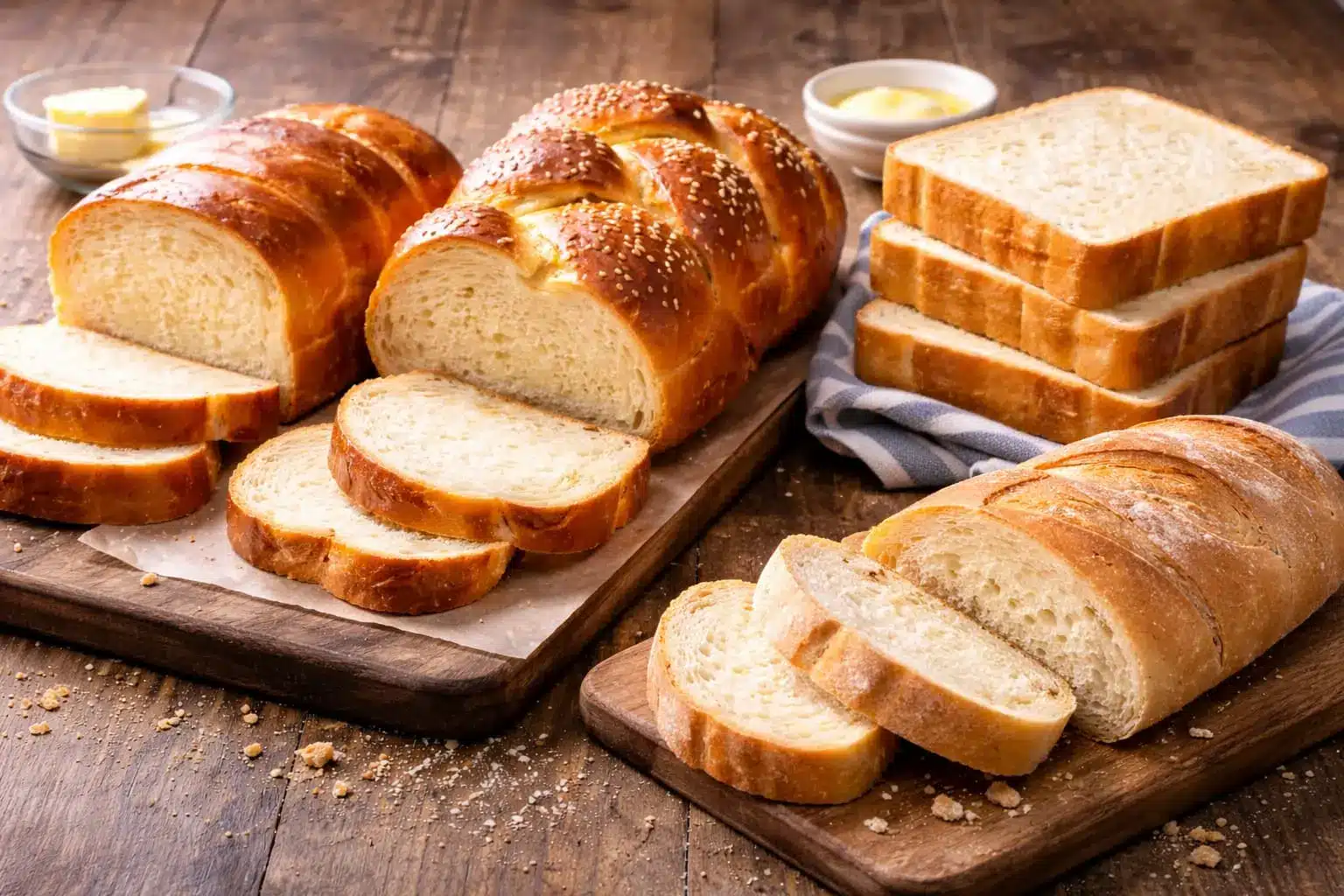
Best Bread for French Toast: 6 Types That Really Work
The bread you choose is the single most important decision in the whole recipe, and it’s the one people spend the least time on. Most of us grab whatever loaf is already on the counter and blame the custard afterward.
French toast isn’t bread dipped in eggs. It’s a balance of structure, absorption and texture. The right loaf pulls in flavor without falling apart, browns evenly, and still gives you something soft in the middle. The wrong one turns breakfast into a soggy apology.
New to this? Start with my how to make French toast guide for the method, then come back here to pick the loaf.
Why the loaf matters more than the recipe
A perfect custard can’t save bad bread.
The whole thing runs on absorption. The bread has to pull the egg mixture in and still keep its shape under heat. Too soft and it disintegrates in the pan. Too dense and the custard never reaches the middle, so you end up with a wet crust wrapped around a dry center.
The best bread for French toast sits between those two failures: enough structure to survive cooking, enough openness in the crumb to actually drink the custard.
It’s why two people can follow the same recipe and get completely different breakfasts. Bread isn’t a neutral container. It’s the foundation.
What you’re actually looking for
Before the list of specific loaves, it helps to know the criteria:
- a soft but structured crumb
- a slightly open interior, not tight and dry
- moderate density
- enough thickness to create contrast
- neutral or lightly sweet flavor
Freshness belongs on that list too. Slightly stale bread usually performs better, because it absorbs custard more evenly instead of turning to mush on contact.
A loaf that misses these will struggle no matter what you put on top of it.
1. Brioche
Brioche is the one most people name first, and the reputation is earned.
It’s enriched with eggs and butter, which gives it a tender crumb and a subtle sweetness that sits naturally alongside cinnamon, vanilla and syrup. It absorbs custard beautifully and doesn’t lose its structure doing it. Soft without being fragile, so it browns evenly, crisps at the edges, and stays creamy in the center.
If you want French toast that feels like a treat rather than a weekday breakfast, this is the loaf.
2. Challah
Challah is the close second, and the better pick if you’d rather the base weren’t sweet.
It’s egg-rich like brioche but lower in fat, so it holds together more firmly. That firmness is exactly what you want for thicker slices and longer cooking times, and it’s why challah is the standard choice for stuffed French toast or anything that needs time in the oven.
The flavor stays neutral enough to go sweet or savory, which makes it the most versatile loaf on this list.
3. Texas toast
Texas toast rarely comes up in these conversations, which is a shame.
Thickness is the whole argument. Thick slices give you the strongest contrast between a crisp exterior and a soft interior, and Texas toast has a consistent enough crumb to absorb custard evenly throughout. It doesn’t have the richness of brioche or challah, but season the custard properly and top it well and it performs.
It’s also usually easier to find and cheaper, which counts for something on a Tuesday.
4. French bread
French bread can be excellent here, with one condition.
Fresh, it’s too lean and too crusty to take on custard properly. Let it go slightly stale, though, and it becomes a strong option: the crust adds texture, and the interior softens nicely once it’s had a chance to soak. It’s particularly good for baked French toast, or any version where you want a firmer bite.
Thickness and freshness are the two levers. Get those right and the rest follows.
5. Sourdough
Sourdough isn’t traditional, and it’s become popular anyway.
The tang plays against sweet toppings in a way some people love and others don’t, so this one is genuinely a matter of taste. What isn’t a matter of taste is the structure: sourdough resists sogginess better than almost anything else on this list.
If you like less sweetness and more complexity, this is your loaf. It’s especially good with fruit, honey, or a custard you’ve barely sweetened.
6. Whole wheat bread
Whole wheat gets skipped more often than it deserves.
A denser whole wheat loaf with a soft crumb works well, particularly cut thick. The flavor is more pronounced, which actually suits cinnamon and maple syrup rather than fighting them.
The one thing to avoid is a loaf that’s already dry or crumbly on the shelf. Those don’t recover.
The loaves that usually disappoint
Soft sandwich bread is too fragile and drinks liquid too fast, so it tends to collapse before it ever reaches the pan.
Very crusty artisan loaves have the opposite problem: the custard never gets past the shell. Gluten-free bread can work, but it needs careful handling and thicker slices than you’d normally cut.
Fresh or stale?
Stale, almost always.
Fresh bread carries more moisture of its own, which limits how much custard it can take on and raises the odds of sogginess. Stale bread absorbs slowly and evenly, which is the behavior you want.
If all you have is fresh, leave the slices out for 15 to 30 minutes, or toast them lightly. It’s a small adjustment that upgrades almost any loaf.
Thickness beats brand
Whatever you buy, cut it thick.
Thin slices cook through before the inside has softened, and you lose the contrast that makes French toast worth making. Thick slices absorb properly and give you a real texture difference between edge and center.
Aim for ¾ to 1 inch. This one change improves nearly every attempt, regardless of which loaf you started with.
If lightness is what you’re chasing, any of these breads will do it. Pair your choice with my guide to fluffy French toast for the texture side of the equation.
Choosing by the result you want
There isn’t one answer, so pick by outcome:
- rich and indulgent → brioche
- structure and versatility → challah
- affordable and consistent → Texas toast
- contrast and depth → sourdough
The best loaf is the one that matches what you actually want on the plate.
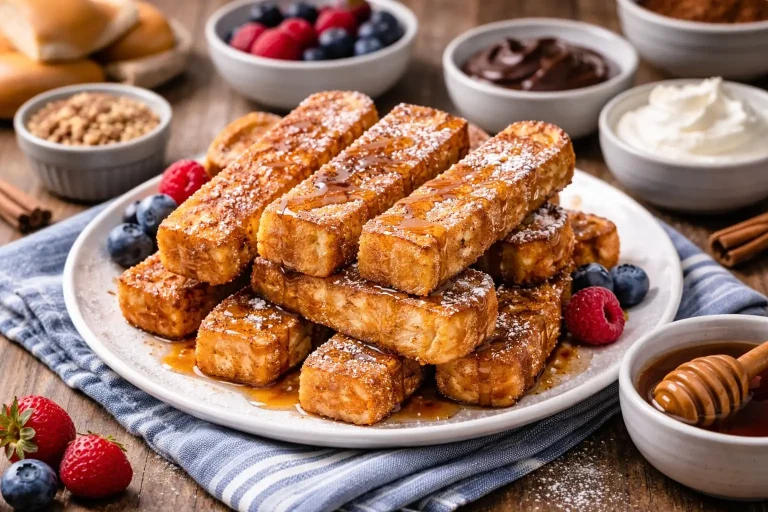
And any of these work for French toast sticks at home, especially cut on the thicker side.
Frequently Asked Questions
Is Texas toast or brioche better for French toast?
Both work well, but they create different results. Brioche produces a richer, more indulgent French toast due to its buttery texture and subtle sweetness. Texas toast, on the other hand, is thicker and more structured, which helps it brown evenly and hold its shape. If flavor and richness matter most, brioche is usually better. If consistency and texture are the priority, Texas toast can be the better choice.
What is a substitute for brioche bread in French toast?
If brioche isn’t available, challah is the closest substitute. It has a similar egg-rich structure and absorbs custard well without becoming soggy. Thick-cut white bread, Texas toast, or even slightly stale French bread can also work as substitutes.